ASSETS 2018 Keynote Speaker
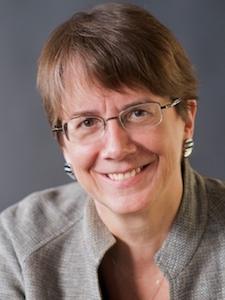
ASSETS 2018 is delighted to announce that this year's keynote address will be given by Judy Brewer, recipient of the 2018 SIGACCESS Award for Outstanding Contribution. This award recognizes individuals who have made significant and lasting contributions to the development of computing technologies that improve the accessibility of media and services to people with disabilities. This year's award to Judy Brewer is in recognition of her life-long dedication to creating policy and guidelines related to making the world wide web accessible and inclusive for people with disabilities.
More on Judy's contributions can be found at http://www.sigaccess.org/2018/07/judy-brewer-outstanding-contribution-recipient-2018/ (and also copied below).
Judy will give her keynote address at the start of the conference on Monday, October 22, 2018.
Exploring Paths to a More Accessible Digital Future
Advances and proliferation of digital technologies have greatly expanded access to the information society for people with disabilities. Yet when considering which devices, applications, or cutting-edge immersive virtual environments to explore, people with disabilities must still take into account whether our needs will be fully supported. In a world with over a billion people with disabilities, and within digital environments that are entirely capable of supporting accessibility, why are such gaps in addressing user needs still present, and how can we change this narrative for the future? For those who have been working on technology accessibility for decades, it is heartening to see so much progress, yet sobering to consider what remains to be done. One dreams of different paths that could lead to a future where digital accessibility would at last be a trusted “given”—a well-tested characteristic of market-leading as well as niche technologies; an inherent characteristic of the latest innovations; and an automated capability of development environments. In the intensely competitive technology marketplace, what factors could help drive a new narrative—one where the design and development environment drives progress, and every digital technology can better meet the needs of an inclusive society?
About the ASSETS 2018 Keynote Speaker
Judy Brewer is the Director of the Web Accessibility Initiative (WAI) at the World Wide Web Consortium (W3C), where she works with an expert team of accessibility specialists, and a broad and vibrant web accessibility community. Since 1997, WAI has developed key accessibility standards, including the Web Content Accessibility Guidelines (WCAG), Authoring Tool Accessibility Guidelines (ATAG), User Agent Accessibility Guidelines (UAAG), and Accessible Rich Internet Applications (WAI-ARIA). Judy has helped drive accessibility standardization for W3C internationally, promoting awareness and implementation of Web accessibility, and promoting effective dialog among industry, the disability community, accessibility researchers, and governments on the development of consensus-based accessibility solutions. Judy Brewer’s leadership, coordination and advocacy in the development of accessible computing has been vital.
WCAG, first issued in 1999, updated in 2008, and most recently in June 2018, has influenced accessibility policy around the world, leading to more accessible websites for millions of people with disabilities, including people who are blind or low vision, Deaf or hard-of hearing, people with motor and dexterity limitations, and cognitive and neurological disabilities. Most governments around the world that have requirements for digital accessibility cite W3C’s WCAG. It has been adopted as an ISO standard (ISO/IEC 40500:2012), incorporated as a part of Section 508 of the Rehabilitation Act in the United States, and in the European Norm (EN) 301-549 (Mandate 376) which requires accessible technology procurement and development in all European Union countries. WCAG has officially been translated into 16 languages, and multiple other unofficial translations exist.
Judy is a Principal Research Scientist at MIT’s Computer Science and Artificial Intelligence Laboratory (CSAIL). Prior to joining W3C, Judy worked on several US-based initiatives to increase access to mainstream technology for people with disabilities, and to improve dialog between industry and the disability community. These initiatives included early work on Section 508; Section 255 of the Telecommunications Act; accessibility of the Windows 95 Operating System, and access to durable medical equipment for people with disabilities. Judy has a background in management, technical writing, education, applied linguistics, disability advocacy, and biotechnology. Judy is a tireless advocate, and has impacted technology and human rights policy around the world.